

Dissecting the “Discount”
The Illusion of a Discount: If Prices Are Ever-Changing, When Are Discounts Real?
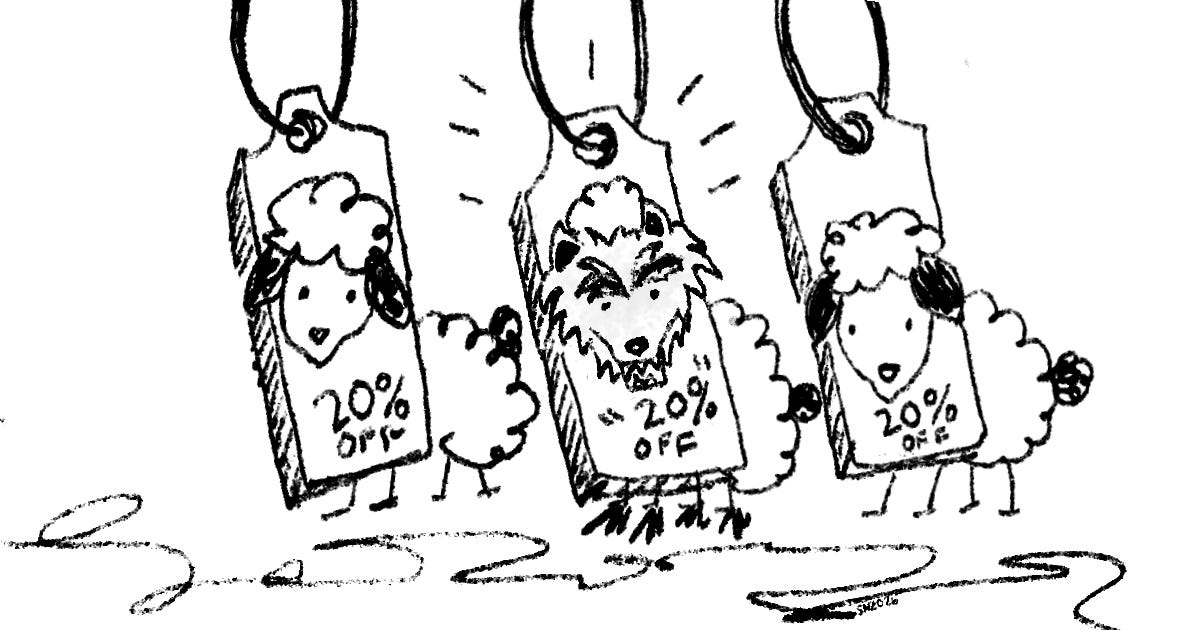
There is a debate brewing over how ride-sharing companies like Uber and Lyft set their prices, as researchers and investigative reporters work to crack open these companies’ “black boxes” and provide much-needed transparency to consumers. Much of the discourse has rightfully focused on whether and how these companies charge different riders different prices for the same or similar trips, and what factors – including personal data and predictions about individuals – influence those decisions. Those questions are critical in an economy increasingly defined by commercial surveillance: policymakers should continue to work to strengthen the laws on this issue, and enforcers should work creatively to enforce existing laws against these practices.
This article focuses on an equally important but different set of questions: when prices are dynamically set and ever-changing – as ride-sharing companies acknowledge – what does a “discount” mean? If every rider sees a different price as frequently as within seconds, what is the discount being measured against? When are these genuine price reductions, and when are they just illusions of a good deal? Fortunately, a well-developed body of “fake discount” law gives us a framework for answering many of these questions.
Ride-share pricing remains opaque, but the evidence is mounting on exploitative pricing structures
People have been looking into how ride-sharing companies like Lyft and Uber set ride prices for years, and for good reason.1 In 2024, a popular Reddit post claimed their phone’s low battery increased prices – which Uber has denied. Another Redditor observed that if they use the same frequent address, the price has gone up each time. Research has also called out price discrepancies. In November 2025, researchers at Johns Hopkins and Harvard published a study indicating that for 2,238 identical rides (the same routes at the same times) in New York City, Uber and Lyft rides differ by about 14% on average. To follow up, two Washington Post journalists conducted their own version of the experiment and got the same result. CBS newsroom staff in Los Angeles called ride-hailing apps at the same time with their phones side-by-side and found price discrepancies.
Consumer Reports recently published research concluding, among their findings, that Lyft and Uber passengers reportedly saw different prices for the same or similar rides, along with similar rides at the same price with different purported discounts.2 Uber has since publicly responded to CR’s claims in detail. The Co-Chairs of the Monopoly Busters Caucus co-chairs, led by Representative Angie Craig, penned a letter to both the Uber and Lyft CEOs, demanding answers about their exploitative pricing structures.
In parallel, a growing body of research and analysis – across academia,3 advocacy,4 journalism,5 policy,6 industry,7 and law enforcement8 – has examined surveillance pricing practices, including in sectors like ride-sharing apps. Surveillance pricing, i.e., the use of data and inferences to set individual prices for the same product, raises a range of concerns, including the normalization of surveillance9 across industries – from ride-sharing and gig work to the larger workforce – as well as other pricing abuses.10
Digging in: Real Deals vs. Fake Discounts
To help analyze fake discounts, we begin with some context on discounts and the law that applies to them.
What is a discount? We all have a common understanding of what a discount is: a reduction from the price a customer would normally pay – the baseline.11 In real life, sometimes people use the term “regular price” or “reference price” or “base price” or “MSRP” to describe the price a customer would normally pay.12
Why do companies offer discounts at all? Historically, they’ve done so as a means to: attract new customers, price discriminate (maximize profits by charging consumers different prices based on their perceived willingness to pay), retain or gain market share, and clear old inventory. More recent research, including “The Loyalty Trap” report, suggests that companies also use discount and loyalty data to make inferences about consumer intelligence, aptitudes, ethnicity, and more.
Why do consumers value discounts? For many people, discounts are not a luxury or a game. They are a practical tool to make essential purchases. Affordability dominates American’s financial worries. As the cost of living continues to rise across food, transportation, healthcare, and other necessities, consumers have grown more deliberate about capturing savings – monitoring prices, using loyalty points to offset spending, and seeking out deals and value whenever possible. More fundamentally, discounts can determine whether a consumer is able to afford the price of a product at all. One consumer explained that participation in a loyalty program made it possible to afford a plane ticket to visit their daughter (See image 1 below). Research also says consumers enjoy the psychological kick from scoring a deal and that discounts can reduce the “economic sacrifice” of buying something. But the importance of discounts should not be understated: they often help families make ends meet by lowering the cost of everyday purchases.
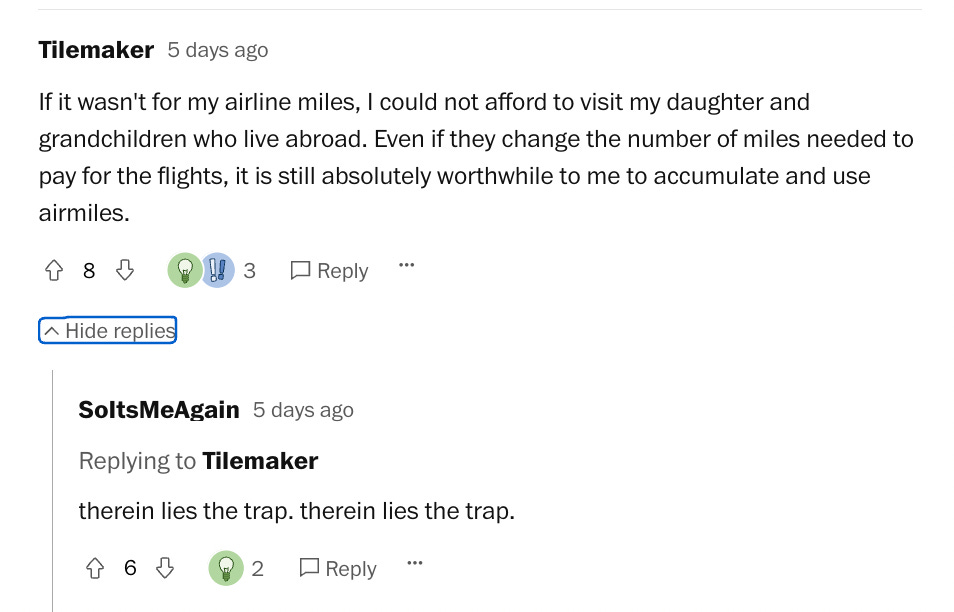
Image 1: Washington Post Comment in response to the “The hidden way using a rewards card can cost you more” article
What is a fake discount, and is it illegal? “Fake discounts” are what we consumer protection nerds call “false reference pricing” – creating a false sense of savings by claiming an “original” price that has no basis in reality. A fake discount is deceptive even if it isn’t set based on personal data or inferences AND even if everyone sees the same fake discount. Fake discounts are not a “new” issue, but have been a pricing tactic for years – even before the rise of the modern surveillance economy.
We can all agree that tricking consumers with fake discounts is bad. Fortunately, the law agrees. Fake discounts are illegal. Period. Full stop. There are federal and state laws that say this. According to FTC’s guidance against deceptive pricing, a claimed discount must be measured against a “bona fide” former price13 – which is a price at which an “article is generally sold,” “substantial sales14 are made in the advertiser’s trade area”15 and “for a reasonably substantial period of time.16 An eclectic mix of states have similar statutes or regulations, including: California,17 Connecticut,18 Illinois,19 Massachusetts,20 Missouri,21 New Jersey,22 Ohio,23 Oregon,24 and Virginia.25 Even in states without specific statutes or regulations on this issue, this practice may be considered deceptive in violation of general state consumer protection laws.
A Defense That Raises More Questions Than It Answers
Uber criticized CR’s conclusions and the underlying methodology. Yet, its own defense of its pricing and discounting practices itself may underscore an even larger fake discount problem.
The price is always changing – even updating “second-by-second”
First, Uber claims that the “promotional discounts” it offers to riders “are not fictitious” because the company “always reduces the fare for that trip request” and the discounts are “transparent, shown up front, and reduce the fare the rider would have otherwise paid for that trip.” But Uber never explains how the “original fare” is calculated – the baseline price against which the discount is allegedly applied. In the same breath, Uber states that: its discounting is a “feature of a dynamic marketplace where non-personalized pricing inputs fluctuate continuously in real time;” “[f]ares update automatically in real time;” and “[p]rices update second-by-second.” Taking Uber at its word that the baseline price is constantly changing, how can it ever be “offered to the public on a regular basis for a reasonably substantial period of time” so as to “provide[] a legitimate basis for the advertising of a price comparison” under FTC guidance and similar state law?
How can there be a discount based on a price that is always changing?
Second, Uber repeatedly suggests that most rides are different from one another: “In a real-time marketplace, a trip is defined not only by where it starts and ends, but also by when it is requested and what marketplace conditions exist at that exact moment. Rider demand, driver availability, traffic, routing, and estimated trip length can all change within seconds.” If Uber is correct that trip prices are so ephemeral and individualized that trip requests cannot be meaningfully compared, then what are Uber’s baseline prices based on?
Setting a discount = setting the price.
Third, Uber admits elsewhere that it uses “personal data to provide promotions and offers that lower prices for consumers” – while at the same time claiming that “we do not personalize prices to individuals.” This distinction appears to be less a principled line than a strategic one: Uber seems to have concluded that routing personalization through discounts is a safer harbor from surveillance pricing criticism than applying it directly to base prices (even though setting a discount based on personal data has essentially the same effect as setting a price based on personal data). If Uber faces no meaningful constraint on using personal data for discounts – but faces public and regulatory pressure when it does so for base prices – it has every reason to migrate more and more of its pricing decisions into the discount framework. The data bears this out: according to a University of Nevada, Las Vegas analysis, the share of Uber rides with an explicit advertised discount grew from 8.5% in 2023 to 11.67% in 2025. The more Uber sets prices through discounts, the more often the above “fake discount” problems are triggered – meaning more consumers exposed to the illusion of a deal that was never real to begin with.
Strike-through prices convey a discount.
Finally, Uber’s response to CR claims that its use of strike-through pricing isn’t advertising a discount at all when accompanied by the label “fares lower than usual.” Uber characterizes it instead as merely providing riders with “historical pricing context.” That distinction doesn’t hold up. Price strike-throughs are, quite literally, the universal language for conveying a discount – any reasonable consumer seeing a higher price crossed out next to a lower one understands it as a signal that they are getting a deal. More importantly, it doesn’t matter how Uber labels the practice: federal and state fake discount laws expressly apply to historical price comparisons. Is Uber complying with these laws, or treating this whole category of advertisements as immune from scrutiny?
Why does this matter, and what can regulators do about it?
If everyone gets a different price for the same trip, and there is no such thing as a “same trip” – what does a “discount” actually mean? Is it clear that the so-called “base” or “advertised” price was ever actually a bona fide price in the first place? More fundamentally, what constitutes a genuine price reduction in a market where prices are individualized to each consumer?
Although the world of pricing has changed, consumer protection law has not. Consumer protection enforcers regularly apply bedrock principles – like prohibitions on falsely advertising a good deal26 – to new contexts and new technology. FTC law and applicable state laws govern when companies can make discount claims and apply across industries. Any company that presents a fake discount can run afoul of existing federal and state consumer protection laws. Uber’s practices raise questions under this framework and warrant careful examination to determine whether consumers are receiving the discounts they are led to expect.
“What does a ‘40% discount’ mean [applied to one person but not the other] if you and I are getting the same price for the same ride?” said NYC’s Department of Consumer Worker Protection Commissioner Samuel Levine in a recent hearing to protect New Yorkers from dynamic and surveillance pricing. “We have to be on guard that we are protecting real discounts and not the fake discounts that so many companies are turning to.”
DFN-004
Adam Teitelbaum is an expert on consumer protection and litigation matters, and is the former Director of the Office of Consumer Protection at the Office of the Attorney General for the District of Columbia.
Stephanie T. Nguyen is a Senior Fellow at Columbia Law School’s Center for Law and the Economy. She was the former Chief Technologist at the FTC under Chair Lina Khan.
Thank you to the expert colleagues who reviewed and provided comments to this piece: Laura Alexander, Seth Frotman, Lee Hepner, Jen Howard, Samuel A.A. Levine, Jonathan Mayer, Tom McBrien, Erie Meyer, Mayu Tobin-Miyaji, Robin Moore, Mike Pierce, Christo Wilson. All errors are our own.
There is also a significant, related body of working studying how ride-sharing companies set wages. See: On Algorithmic Wage Discrimination by Veena Dubal (and many others). But that is a subject for another post.
https://cspri.engineering.gwu.edu/racial-bias-present-ride-share-pricing-algorithms-study; https://dl.acm.org/doi/10.1145/3715275.3732099; https://dl.acm.org/doi/10.1145/2815675.2815681; https://hub.jhu.edu/2026/01/02/uber-lyft-study-carey-business-school/’ https://lpeproject.org/blog/surveillance-pricing-exploiting-information-asymmetries/; https://news.northeastern.edu/2014/10/23/ecommerce-study/; https://cdn.vanderbilt.edu/vu-URL/wp-content/uploads/sites/412/2025/10/17195957/The-Loyalty-Trap.pdf
https://consumerwatchdog.org/privacy/consumer-alert-details-uber-example-of-surveillance-pricing/;
https://prospect.org/2026/01/26/organized-money-new-frontier-price-discrimination/; https://www.economicliberties.us/our-work/prohibiting-surveillance-prices-and-wages/
https://oversight.house.gov/release/comer-investigates-use-of-artificial-intelligence-to-set-prices-for-consumers/; https://jayapal.house.gov/2026/06/23/monopoly-busters-caucus-co-chairs-press-uber-and-lyft-following-reports-of-ai-driven-surveillance-pricing/;
https://rideobi.com/
As a broader question, we must confront a possibility: Have we normalized surveillance as the default foundation of our modern economy? By this, I mean a system where any company by default collects, infers, uses, shares, and monetizes information about people’s lives – with few meaningful structures in place. This includes being overly reliant on notice-and-consent and privacy disclosures to bless the practices or not having bright line rules on how data shapes the prices, opportunities, and choices presented to consumers.
See e.g. Surveillance pricing, price discrimination, drip pricing, dark pattern pricing, hidden and junk fees, bait-and-switch pricing, fake discounts, algorithmic pricing, surge pricing, price collusion, subscription traps, etc.
See e.g. real life.
Id.
For full details of the law, please visit: https://www.ecfr.gov/current/title-16/chapter-I/subchapter-B/part-233
“that is, not isolated or insignificant”
“the area in which [the seller] does business”
“in the recent, regular course of [the seller’s] business” among other provisions.
Cal. Bus. & Prof. Code § 17501.
Conn. Agencies Regs. 42-110b-12a.
Ill. Admin. Code tit. 14, § 470.220.
940 Mass. Code Regs. 6.05.
Mo. Code Regs. Ann. tit. 15, § 60-7.060.
N.J. Admin. Code § 13:45A-9.6.
Ohio Admin. Code § 109:4-3-12.
Or. Admin. R. 137-020-0010.
Va. Code Ann. § 59.1-207.41.
See e.g. https://dailydot.com/home-depot-sale-prices, https://www.classaction.org/news/kohls-hit-with-class-action-over-alleged-use-of-false-reference-prices, https://www.cbsnews.com/news/amazon-fake-sale-prime-day-lawsuit/, https://www.washingtonpost.com/business/2023/11/21/fake-sale-deceptive-pricing/, https://www.checkbook.org/washington-area/sale-fail/, https://topclassactions.com/lawsuit-settlements/lawsuit-news/lowes-faces-another-lawsuit-over-allegedly-deceptive-discount-pricing-scheme/, https://www.library.hbs.edu/working-knowledge/bargain-hunters-beware-a-store-s-original-price-might-not-be-after-all, https://www.news.com.au/national/courts-law/supermarket-giant-woolworths-accused-of-duping-shoppers-with-fake-discounts/news-story/873699dea6ddf2f1efba12a93bfb8ed4
 | A guest post by
|
This is exactly why mobility needs a clearer distinction between a marketing discount and a structural price reduction.
In Smart Mobility, the lower passenger price is not treated as a “discount” in the usual promotional sense.
It is not a coupon.
It is not a temporary offer.
It is not a personalized price trick.
It is not created by pushing the driver’s income down.
It is a different trip structure.
A solo ride has one price, calculated according to the local taxi and mobility rules of the city or municipality.
But when two, three or four compatible passengers travel in the same direction at a similar time, the trip is no longer economically identical to a solo ride. The cost structure changes because the same vehicle, driver time and route capacity are used more efficiently.
That is where Smart Mobility creates value.
Passengers pay less because demand is coordinated.
Drivers can earn more per route because one trip becomes economically stronger.
Cities get less duplicated movement and more transparent, traceable mobility activity.
So the point is not “we give a discount”.
The point is: shared mobility should have its own lawful, transparent and economically rational pricing structure.
That is the difference between reducing price as marketing and reducing cost through system efficiency.